
Dare County Arrest Records and Court Charges
Dare County arrest records begin on the sheriff or law enforcement side. They may show that a person was taken into custody, booked at the Dare County Detention Center, brought before a magistrate, or assigned a bond. The official research did not confirm a public browser mugshot or booking database on the sheriff website, so arrest-level details should not be treated as a single open blotter. Custody and roster access are tied to the Detention Center, the Dare County Sheriff NC app, NC SAVAN for sentence or release notices, and direct sheriff or magistrate contact when a bond question is urgent.
Court charges after arrest are narrower and more formal. Dare County criminal and traffic matters are retained by the Criminal/Traffic Division of the Clerk of Superior Court, and the public computer system at the Clerk's Office can show criminal records unless the file is confidential or sealed. A charge record identifies the alleged offense, statute or charge class, case or citation number, bond, issuing judicial officer, and court date when those fields exist. The full plea, verdict, sentence, or dismissal belongs in the Dare County criminal court records file, while jail roster and booking detail belong with inmate records.
Search Dare County Arrest Records
No single Dare County source merges arrest, booking, prosecution, and disposition into one public screen. Start with the record type. For filed charges, use the North Carolina eCourts Portal, the court date search, or the Clerk of Superior Court public terminals. For current custody, use the Dare County Sheriff NC app if the app feature is available, or contact the Detention Center. For a warrant or bond issue, the Magistrate's Office is the local point that may set or handle bond after arrest.
- Check the N.C. eCourts Portal by name, case number, or citation number for a filed charge or court case.
- Use the N.C. court calendar search to confirm a hearing date when the case is already scheduled.
- Call or visit the Dare County Criminal/Traffic Division for public terminal access, copies, or record status.
- Use Detention Center or app channels for current custody, then match the booking name to the court case before treating a charge as the final outcome.
The county public records page is explicit about routing. Divorce, estates, traffic, criminal disputes, civil disputes, and other court-related files go to the Clerk of Superior Court, not the county public information director. Sheriff administrative records may use sheriff or county public records channels, but the court charge itself is a court file once it is filed with the Clerk.
The Apple App Store listing for the Dare County Sheriff NC app identifies the official sheriff app channel used for public safety tools.
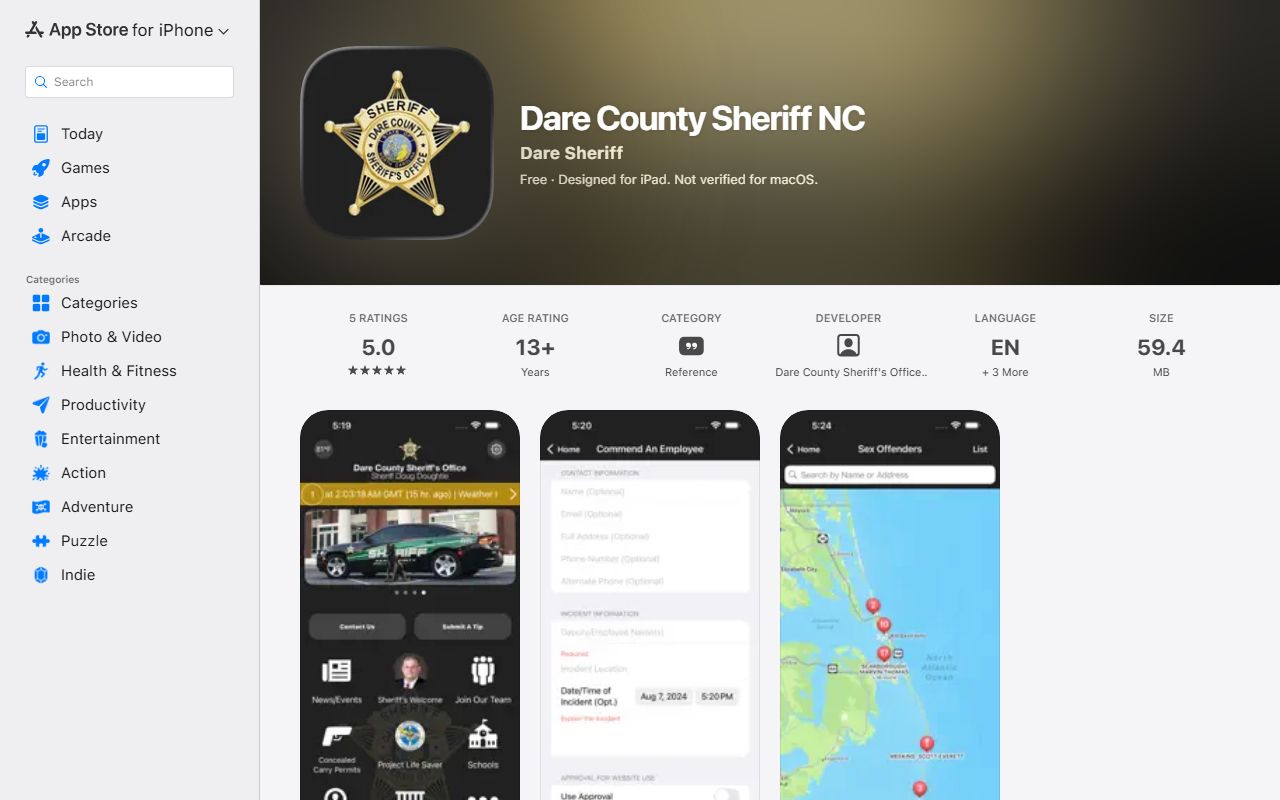
The app is relevant because official research found app features for current inmate search, sex offender access, tips, and public safety news, while a normal browser booking database was not confirmed.
Dare County Charge Documents
A charge record starts when an alleged offense is put into a charging paper or court case. In North Carolina, the route can vary by offense level and stage. A magistrate may issue an arrest warrant based on probable cause. District Court hears misdemeanors and infractions without a jury. Superior Court handles felonies and appeals from misdemeanor and infraction cases decided in District Court. The District Attorney prosecutes criminal charges for the State and handles plea talks, trial preparation, and victim or witness coordination.
| Document | Who Is Involved | How It Fits Dare County Charges |
|---|---|---|
| Criminal complaint or citation | Law enforcement, magistrate, or court officer | Often starts a misdemeanor, infraction, or citation-based matter and supplies the charge name, citation number, and first court date. |
| Information or prosecutor filing | District Attorney | Shows the State's charging decision and may reflect amended, reduced, or added counts as the case moves. |
| Indictment | Grand jury and prosecutor | Formal felony accusation used in Superior Court when a felony proceeds beyond the early stage. |
Clerk staff maintain the court record once the case is filed, but they do not prosecute the charge. The District Attorney's Office for Prosecutorial District 1 is the State's charging and prosecution office for Dare County. Victims and witnesses subpoenaed by the State are directed by the Dare Criminal/Traffic page to contact the District Attorney's Office for instructions or concerns.
Dare County Charge Status
A filed charge is not fixed in place. It can be pending at first appearance, amended after prosecutor review, reduced through a plea, dismissed by the court or State, or end in a verdict. Dare County court records may also show bond, fines, costs, probation conditions, motions, expunction filings, and disposition entries. Read each count on its own. One arrest can produce several charges, and each charge can end a different way.
| Status | Meaning | Record Caution |
|---|---|---|
| Pending | The charge has been filed, but no final disposition appears. | Do not treat it as a conviction. |
| Amended or reduced | The charge name, class, or count changed after filing. | Compare the original charge with the final disposition line. |
| Dismissed | The charge ended without conviction for that count. | A dismissal may still appear unless sealed or expunged. |
| Nolle prosequi | The State declines to proceed on that charge. | Confirm whether related counts remain active. |
| Convicted or responsible | A guilty plea, responsible plea, verdict, or judgment was entered. | Check sentence, costs, probation, and license effects if listed. |
North Carolina court files use legal terms that can look final when they are not. Disposition means the final outcome of a charge or case. Arraignment is the proceeding where charges and a plea are addressed. Bond is a release condition or security set before trial. A magistrate is a judicial officer who may issue warrants, set bail, and handle small claims.
Dare County Charges vs Convictions
The most important rule for reading Dare County arrest records is that a charge is an accusation. A conviction is a court outcome. A sheriff press release, warrant entry, citation, or initial charge list may show what the person was accused of at arrest, but the Clerk's case record is needed to see whether the charge was dismissed, reduced, pleaded, tried, or sentenced. Background use has legal limits, especially for employment, housing, credit, insurance, or tenant screening.
| Point | Charge | Conviction |
|---|---|---|
| Stage | Filed after arrest, citation, warrant, or prosecutor review. | Entered after a guilty plea, responsible plea, verdict, or judgment. |
| Proof level | Based on probable cause or charging authority. | Based on plea, trial finding, or court judgment. |
| Where to verify | Portal, court calendar, Clerk public terminals, and charging paper. | Disposition, sentence, costs, probation, and final judgment in the court file. |
| Record risk | Can be amended, reduced, dismissed, or expunged if eligible. | May affect sentence, probation, license status, and criminal history. |
The Google Play listing for the Dare County Sheriff NC app provides the Android source for the same sheriff app channel.
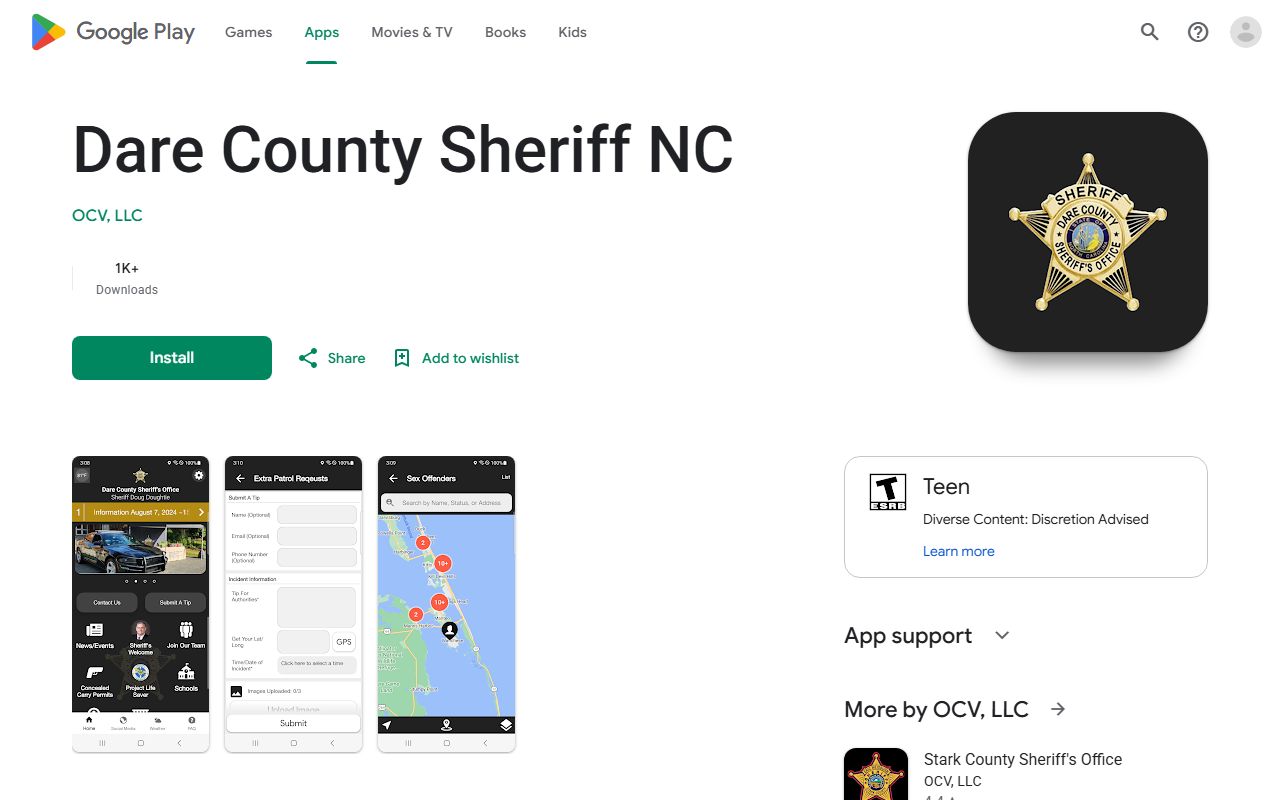
Because the app is a sheriff channel, use it for sheriff-side public safety tools and custody features, then use court channels to confirm filed charges and final dispositions.
Dare County Charge Access Laws
North Carolina public records law treats public records and public information made or received by government agencies as the property of the people, but court records have their own clerk access rules. G.S. 7A-109 requires clerks to maintain records, files, dockets, and indexes and makes them open for public inspection unless a law says otherwise. The Dare County Clerk page states that files are public except juvenile files, adoption records, and certain confidential records.
For copies, NCAOC procedures cite inspection at no charge and a standard copy rate of $0.25 per page under public records fee rules. Public access does not mean every field is shown online. Personal identifiers, sealed records, expunged matters, juvenile files, adoption files, and sensitive mental health or commitment matters may be withheld, redacted, or handled outside normal public inspection.
Note: File an expunction petition with the Clerk's Office only after checking eligibility by charge, disposition, age, and statute.
Restricted Dare County Charge Records
Some Dare County charge records are not open to ordinary public inspection. Juvenile files are kept separate under North Carolina juvenile record law. Adoption records are excluded from ordinary Clerk inspection. Sealed records require a statute or court order for access. Expunged records are removed from public criminal history visibility under the order. Personal identifying data such as Social Security numbers, financial account numbers, driver license numbers, PINs, passwords, and similar protected data may be redacted under state law.
Expunction is not automatic. Dare County's Criminal/Traffic Division says expunction petitions are filed in the Clerk's Office, and it warns that not all charges are eligible. The right form and statute depend on the charge, disposition, and defendant's age. Clerk staff cannot choose a form, advise how to complete it, or promise that a charge will be cleared. The court order controls what is removed from public access.