
Dare County Criminal Court Records
The criminal court case file begins when a charge or criminal process becomes a court matter. Dare County's Criminal/Traffic Division retains records of all criminal cases in the county, including felonies, misdemeanors, and traffic infractions. The Clerk of Superior Court is the local records officer for Superior Court and District Court, so case files, public terminal access, paper records, and certified copies route through the Clerk rather than the Sheriff's Office.
North Carolina's structure controls which court produces the record. Superior Court handles felony criminal cases and appeals from misdemeanor and infraction cases decided in District Court. District Court hears misdemeanors and infractions without a jury. Magistrates function within District Court and may issue warrants, set bail, accept certain minor pleas or waivers, and handle small claims. Arrest reports and jail booking details may start outside the court file, but charges, pleas, dispositions, and sentences live in the criminal case record. For the narrower arrest-to-charge pathway, use Dare County arrest records and court charges.
The official North Carolina District Court page explains why misdemeanors, infractions, and magistrate matters appear at that level.
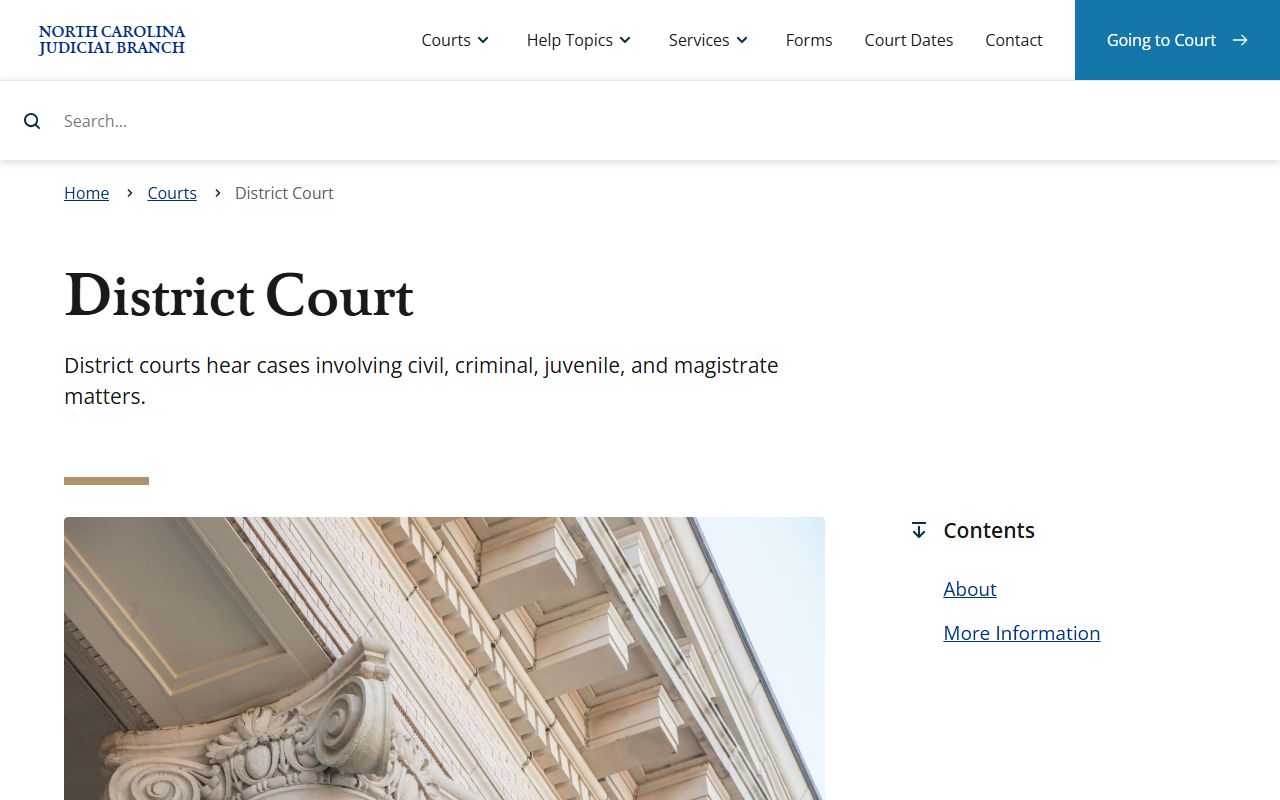
That court structure is the reason many Dare County criminal and traffic records are District Court records unless a felony or appeal moves the case to Superior Court.
Search Dare County Criminal Cases
The online starting point is the N.C. eCourts Portal, filtered to Dare County when possible. Search by case number first if known. Defendant name can work, but it may bring back records from other counties if the county filter is missed. Citation number is useful for traffic and infraction cases. Hearing date filters can help when the goal is a court date, while a calendar search may be faster for session-only questions.
- Open the eCourts Portal and select a case or hearing search option.
- Use case number for exact matching, or defendant name with Dare County as a filter.
- For traffic or infraction records, use the citation number if it appears on the ticket.
- Open the case result to read docket activity, charges, court dates, plea, disposition, and sentence fields that are public.
- Use the Clerk of Superior Court for public terminal searches, paper files, certified copies, and official criminal background search needs.
Statewide Judicial Branch guidance says criminal case information may be accessed through public, self-service terminals in a clerk of court office. Those terminals can search by defendant name, case number, or victim/witness name. Dare County's Clerk page confirms that criminal records are available on the public computer system. The Portal is useful, but the terminal and Clerk's office remain essential for older records, missing online results, paper documents, and background-check-grade searches.
Dare County Criminal Case Flow
Criminal court records make more sense when read as a process. A case can start with an arrest warrant, citation, magistrate paperwork, complaint, information, or indictment. The District Attorney prosecutes criminal charges for the State. Dare County is in Prosecutorial District 1, and the N.C. Judicial Branch contact directory lists the District Attorney phone as (252) 331-4530. Victims and witnesses subpoenaed by the State are directed by Dare County's Criminal/Traffic page to contact the District Attorney's Office for instructions or concerns.
Case flow: Charges Filed › Arraignment › Pretrial / Motions › Plea or Trial › Disposition › Sentencing
| Stage | What Happens |
|---|---|
| Charges Filed | The alleged offense enters the court system through a citation, warrant, complaint, information, indictment, or related process. |
| Arraignment | The charge and plea are addressed, and the record may show counsel, conditions, or next settings. |
| Pretrial / Motions | Parties file motions, seek continuances, address evidence issues, and prepare for plea or trial. |
| Plea or Trial | The defendant may plead guilty, plead not guilty, resolve by agreement, or proceed to trial. |
| Disposition | The court records the outcome, such as guilty, not guilty, dismissed, responsible, not responsible, or other result. |
| Sentencing | If convicted or found responsible, the court records punishment, fines, costs, probation, restitution, or other conditions. |
Dare County Criminal Record Fields
A criminal court record should be read field by field, not as a simple guilt report. Charges can be amended, reduced, dismissed, or resolved by plea or trial. A record may show bond or magistrate fields before final outcome. It may also include expunction filings, but an expunction petition is not proof that the record has been cleared. The court order controls what happens to public access.
| Field | What It Shows |
|---|---|
| Case number | The exact court identifier used for Portal, calendars, public terminals, and Clerk copy requests. |
| Defendant | The person accused in the criminal case, separate from victims or witnesses. |
| Charge | The alleged offense, statute, class, citation or warrant link, and sometimes charging agency. |
| Bond or release conditions | Security, custody, or release conditions when they are part of the public court record. |
| Hearing dates | Arraignment, motions, plea, trial, disposition, sentencing, or review dates. |
| Plea | The defendant's formal answer, such as guilty or not guilty, when entered. |
| Disposition | The outcome of a charge or case, such as dismissed, guilty, not guilty, responsible, or not responsible. |
| Sentence | Fines, costs, probation, restitution, custody, suspended sentence, or other court-ordered terms. |
| Expunction filing | A petition or order related to removing eligible records from public access, when public and applicable. |
For the wider public case file search across civil, traffic, estate, and special proceeding records, use the general Dare County court records lookup process.
Dare County Charges vs Convictions
A charge is an accusation filed into the court process. A conviction is an outcome after a guilty plea, guilty verdict, or responsible finding where the court enters judgment. The distinction matters because a Dare County criminal court record can show charges that were dismissed, reduced, amended, or resolved without conviction. It can also show multiple charges with different outcomes in the same case.
| Comparison Point | Charge | Conviction |
|---|---|---|
| Meaning | An alleged offense filed by law enforcement, magistrate process, prosecutor, or grand jury action. | A court outcome showing guilt or responsibility after plea, verdict, or judgment. |
| Timing | Appears near the start of the case and may change before final outcome. | Appears after plea, trial, or other final court action. |
| Record risk | May be dismissed, amended, reduced, or left pending. | May lead to sentence, fines, costs, probation, license effects, or other consequences. |
| Search caution | Do not treat a listed charge as proof of guilt. | Read the sentence and disposition to understand the final court action. |
Read Dispositions and Sentences
Disposition is the final outcome of a charge or case. In Dare County criminal records, common disposition ideas include guilty, not guilty, dismissed, responsible, not responsible, or another court-specific result. A sentence is the punishment or set of conditions ordered after conviction or responsibility. It can include fines, court costs, restitution, probation, suspended sentence terms, custody, or license consequences in traffic-related matters.
Read each charge separately. One charge may be dismissed while another results in conviction. A misdemeanor case in District Court may also be appealed to Superior Court, which changes the later case path. If the court date is the urgent issue, use the calendar or Portal hearing search. If the outcome is the issue, look for the disposition and sentence fields or contact the Clerk for the case file.
Note: A docket line can summarize an event, but the Clerk's paper file may contain the controlling order.
Sealed vs Expunged Criminal Records
Restricted criminal records are not all the same. A sealed record is hidden from public inspection by statute or court order, but it may still exist for limited official uses. An expunged record is removed from public access under an expunction order. North Carolina has multiple expunction statutes, and eligibility depends on the charge, disposition, age, timing, and prior record details. Dare County's Criminal/Traffic Division states that expunction petitions are filed in the Clerk's Office and warns that the Clerk cannot advise which form to use or how to complete it.
| Comparison Point | Sealed | Expunged |
|---|---|---|
| Public visibility | Hidden from ordinary public inspection unless access is authorized. | Removed from public criminal history visibility under the court order. |
| Record status | The file may still exist, but access is limited. | The public record is treated under the expunction order's terms. |
| How it happens | By statute, court order, or confidential case category. | By filing a petition and obtaining an expunction order if eligible. |
| Dare County route | Ask the Clerk what authority is needed for access. | File the petition in the Clerk's Office for the county where the charge was handled. |
G.S. 15A-145.5 is one key North Carolina expunction statute for certain nonviolent misdemeanors and felonies.
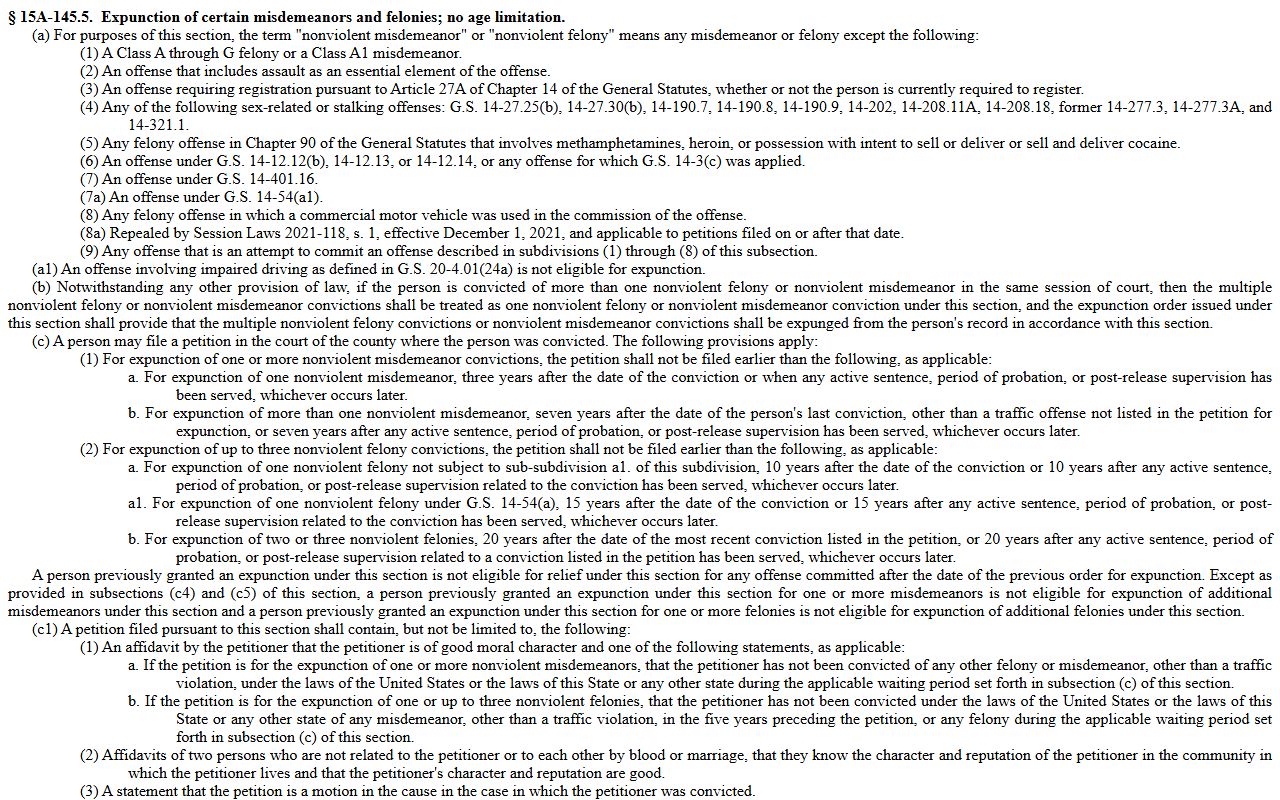
Other expunction statutes may apply to dismissals, not-guilty results, juvenile matters, and age-specific offenses, so the case facts control eligibility.
Public Access to Dare County Criminal Records
Public access rests on both court record law and confidentiality rules. G.S. 7A-109 requires clerks to maintain court records, files, dockets, and indexes and makes them open for public inspection during regular office hours unless law prohibits access. G.S. Chapter 132 defines public records broadly, while G.S. 132-1.10 limits display of personal identifying information.
For Dare County, ordinary adult criminal case information may be found through Portal, public terminals, court calendars, and Clerk records. Juvenile files are separate and confidential. Adoption matters are excluded from ordinary public inspection. Sealed and expunged records are not public lookup records. Ongoing cases may also contain documents or details that are not shown online. A certified copy, complete paper file, or official criminal background search should be handled through the Clerk of Superior Court.
The N.C. Indigent Defense Services Dare County page identifies the local Public Defender district for appointed counsel information.
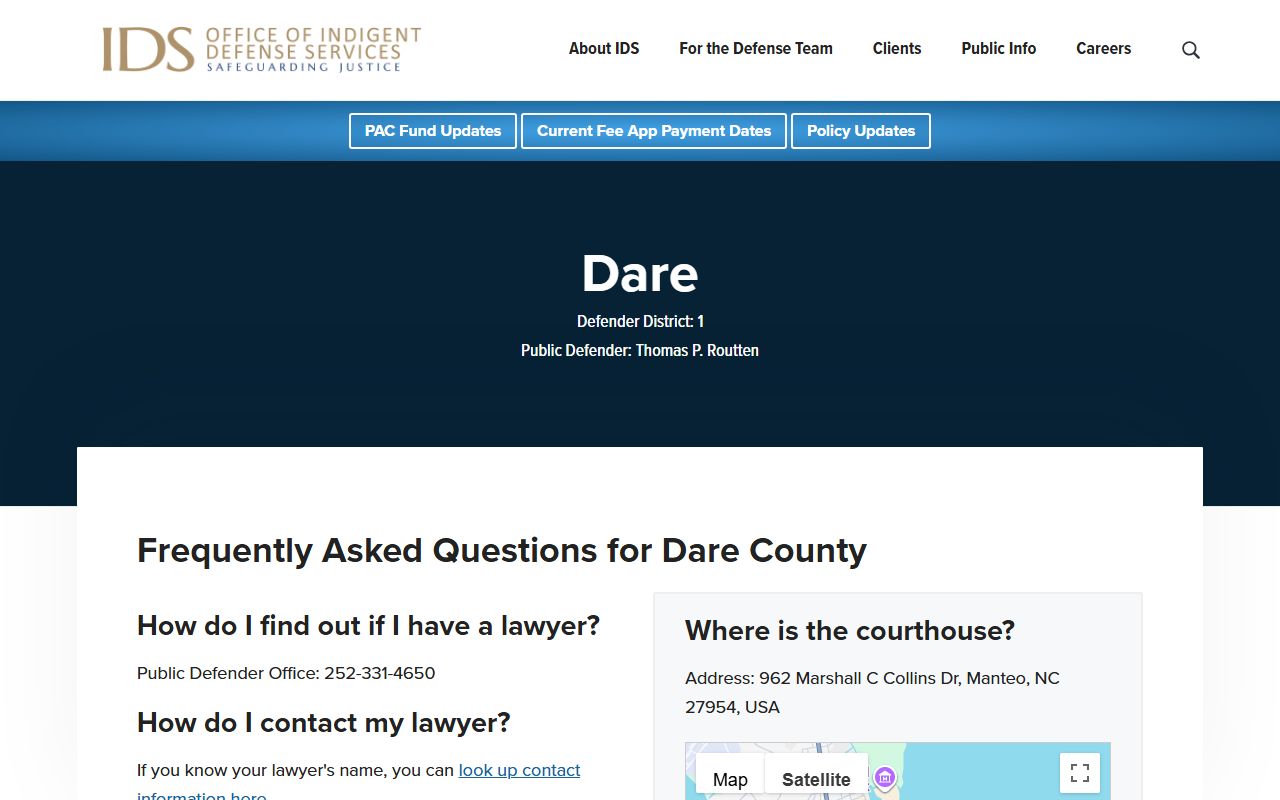
Public defender information helps explain representation in criminal cases, but appointment happens through the court's indigency process.
Restricted Dare County Criminal Records
Restricted criminal records require care. Juvenile records are maintained separately under North Carolina juvenile confidentiality rules. Sealed criminal files need a court order or statutory authority for access. Expunged files are removed from public visibility under the expunction order. Mental health and involuntary commitment matters are not standard criminal case lookups, even when a magistrate is involved. Protected identifiers such as Social Security numbers, financial account numbers, driver license numbers, PINs, and passwords are also restricted or redacted.
Anyone seeking a restricted record should start with the exact case number, defendant name, charge, disposition date, and reason access is needed. The Clerk can explain filing and routing, but Clerk staff, judges, and District Attorney staff cannot provide legal advice about consequences, eligibility, or strategy. The Public Defender may be appointed only through the court's indigency process, and private counsel questions are outside the Clerk's role.