
Search Dare County Court Records Online
The main online route for Dare County court records is the N.C. eCourts Portal. The Portal is the statewide public case information and payment tool for participating North Carolina counties. Dare County is part of the North Carolina unified court system, so a Portal search should be filtered to Dare County when possible. The Portal can help locate case information, hearing dates, citation information, and some payment options, but it is not the only official record source. The North Carolina Judicial Branch warns that background-check-grade criminal record searches should use the clerk's office, not Portal alone.
The Judicial Branch court records instructions describe a fuller path: public self-service terminals in clerk offices for criminal, civil, special proceeding, and estate matters; paper court files at the county clerk's office where the case is located; and copies made for a fee. Dare County adds a local detail. The Clerk of Superior Court provides public access computers for VCAP, the civil case database used for civil cases, judgments, liens, and related records, and criminal records are also available on the public computer system.
The N.C. Judicial Branch public record request page is another official route for existing administrative records and NCAOC records.
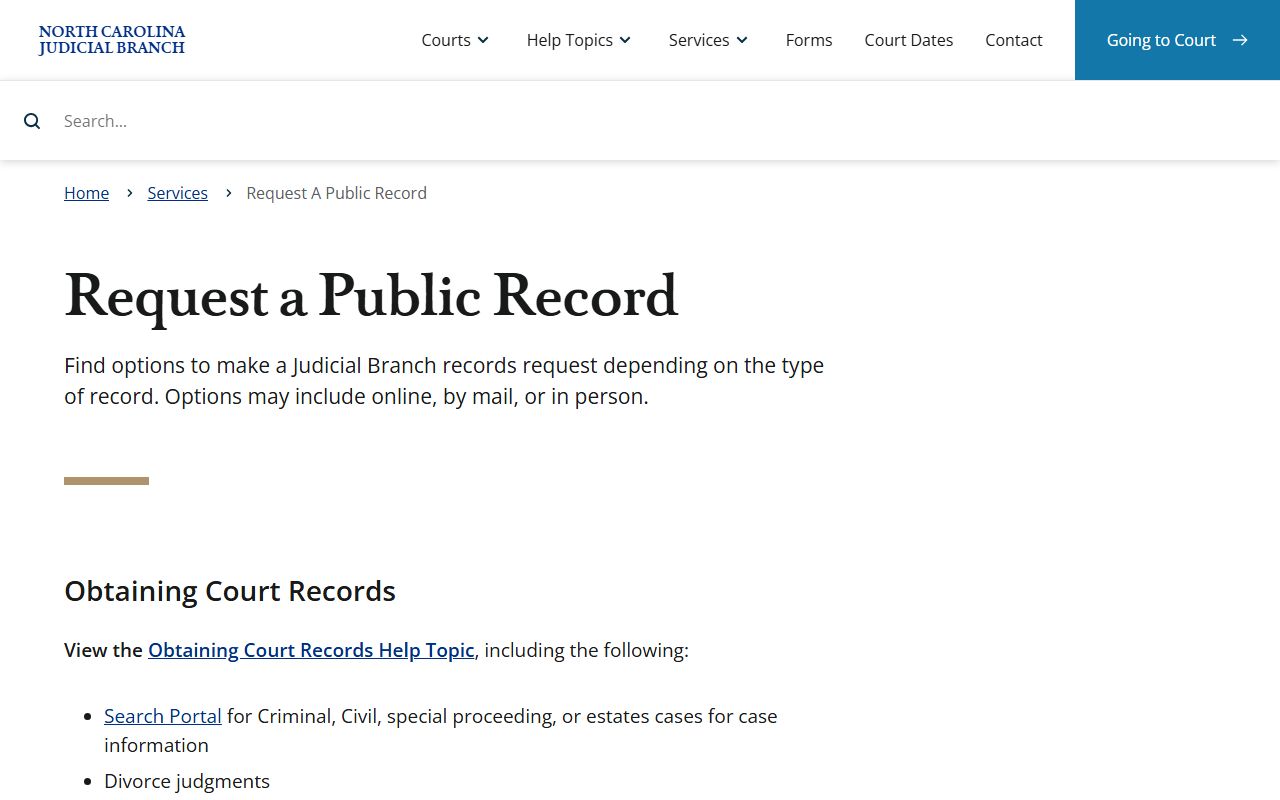
That request channel is useful for Judicial Branch records, while county case files still route through the Dare County Clerk of Superior Court.
- Start at the N.C. Judicial Branch Dare County page or open the eCourts Portal directly.
- Enter the case number first if it is known. For a name search, add Dare County as a county filter to reduce statewide false matches.
- Use citation number for traffic and infraction matters, especially when checking payment or court date status.
- Use the civil or criminal calendar tool when the immediate question is a hearing date or session, not the full case file.
- Call or visit the Clerk of Superior Court for paper files, older records, certified copies, public terminal searches, and background-check-grade criminal searches.
- Use the Register of Deeds only for real estate records, maps, plats, marriage licenses, and marriage certificates. Divorce judgments are Clerk records.
Dare County Court Records Search Fields
Portal searches are flexible, but the most useful field depends on the record type. A case number is best for an exact Dare County court record. A party name can find civil, criminal, domestic, estate, or special proceeding entries, but common names may return cases from other counties unless Dare County is selected. Citation number is the better field for traffic records. Attorney, hearing date, case type, and location filters can narrow results when the Portal exposes those options for the selected search mode.
| Field Label | Type | Required | Notes / Format |
|---|---|---|---|
| Name | Text | No | Use a party or defendant name; filter to Dare County when possible. |
| Case Number | Text | No | Best field for a known civil, criminal, estate, or special proceeding case. |
| Citation Number | Text | No | Used for traffic and infraction lookup, payment, and mail payment matching. |
| Attorney | Text | No | Portal search materials identify attorney as a search option. |
| County | Dropdown or filter | No | Select Dare County to avoid unrelated statewide matches. |
| Hearing Date / Date Range | Date | No | Useful for hearings, calendars, and near-term court date checks. |
| Case Type / Location | Filter | No | Visible options can vary by search mode and case category. |
The Judicial Branch summary of North Carolina public records law explains why public access is broad but still bounded by confidentiality rules.
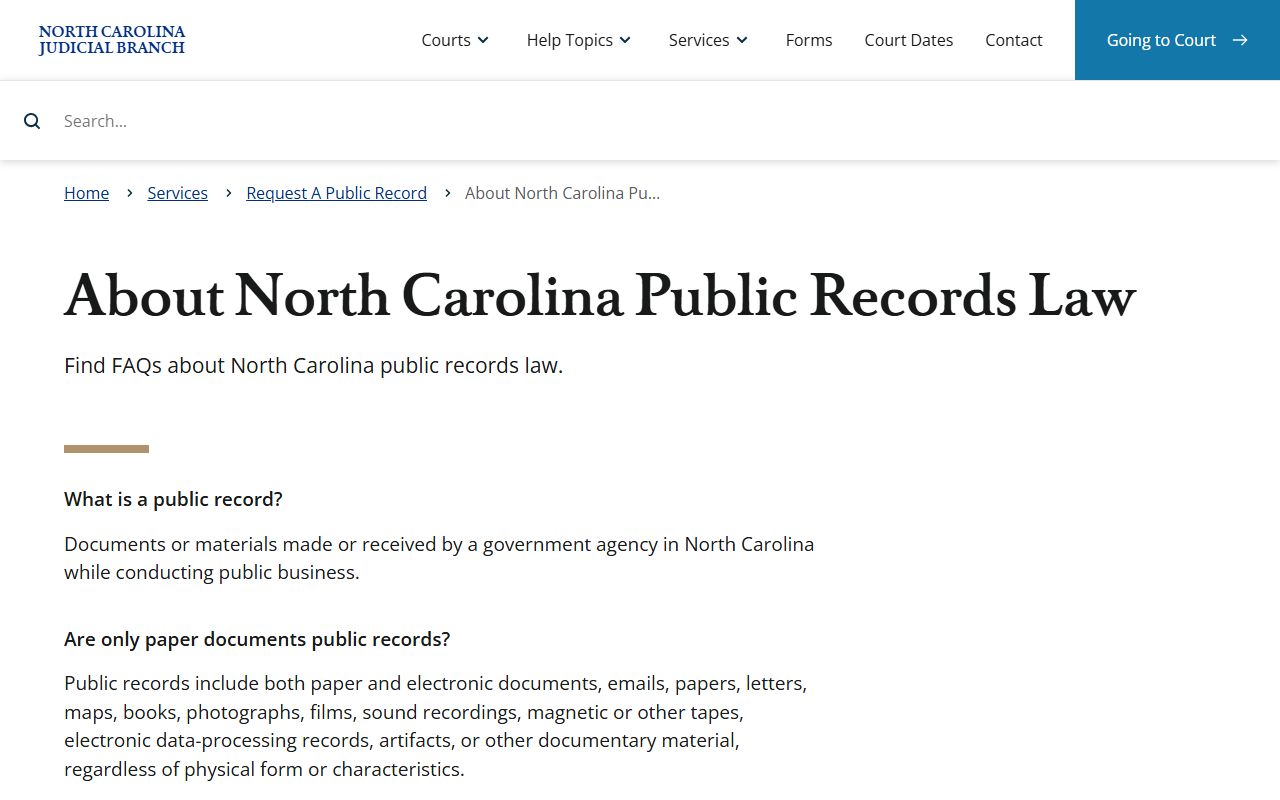
That access law helps frame why ordinary court files can be inspected while juvenile, adoption, sealed, and protected identifier details are withheld.
Types of Dare County Court Records
Dare County court records are kept within North Carolina's statewide court structure. The Clerk of Superior Court is the records officer for both Superior Court and District Court in Dare County. Superior Court handles felony criminal cases, civil cases over $25,000, and appeals from misdemeanor and infraction cases decided in District Court. District Court handles misdemeanors, infractions, domestic matters, juvenile matters, civil cases of $25,000 or less, and magistrate functions such as small claims, bail, and warrants.
The record type controls where details appear. A criminal case file may show charges, bond, pleas, motions, hearings, disposition, sentence, fines, costs, probation conditions, and expunction filings. A civil file may show complaints, summonses, service returns, motions, orders, judgments, liens, exemption notices, writs, and collection filings. Estate and special proceeding files are also court records under the Clerk's role, though some guardianship, incompetency, adoption, and juvenile materials are restricted.
- Criminal and traffic records are retained by the Criminal/Traffic Division and may be searched by Portal, public terminal, calendar, or Clerk contact.
- Civil records include small claims, civil district, civil superior, domestic violence, divorce, custody, support, judgments, and liens.
- Estate records cover wills, probate, administration, inventories, accountings, and small estate matters through the Clerk's probate function.
- Special proceedings include foreclosures, motor vehicle liens, name changes, partitions, guardianships, incompetency, adoptions, and surplus funds.
- Marriage certificates and recorded real estate documents are Register of Deeds records, not court case files.
The official court records help page gives the statewide route for public terminals, paper files, and copy requests.
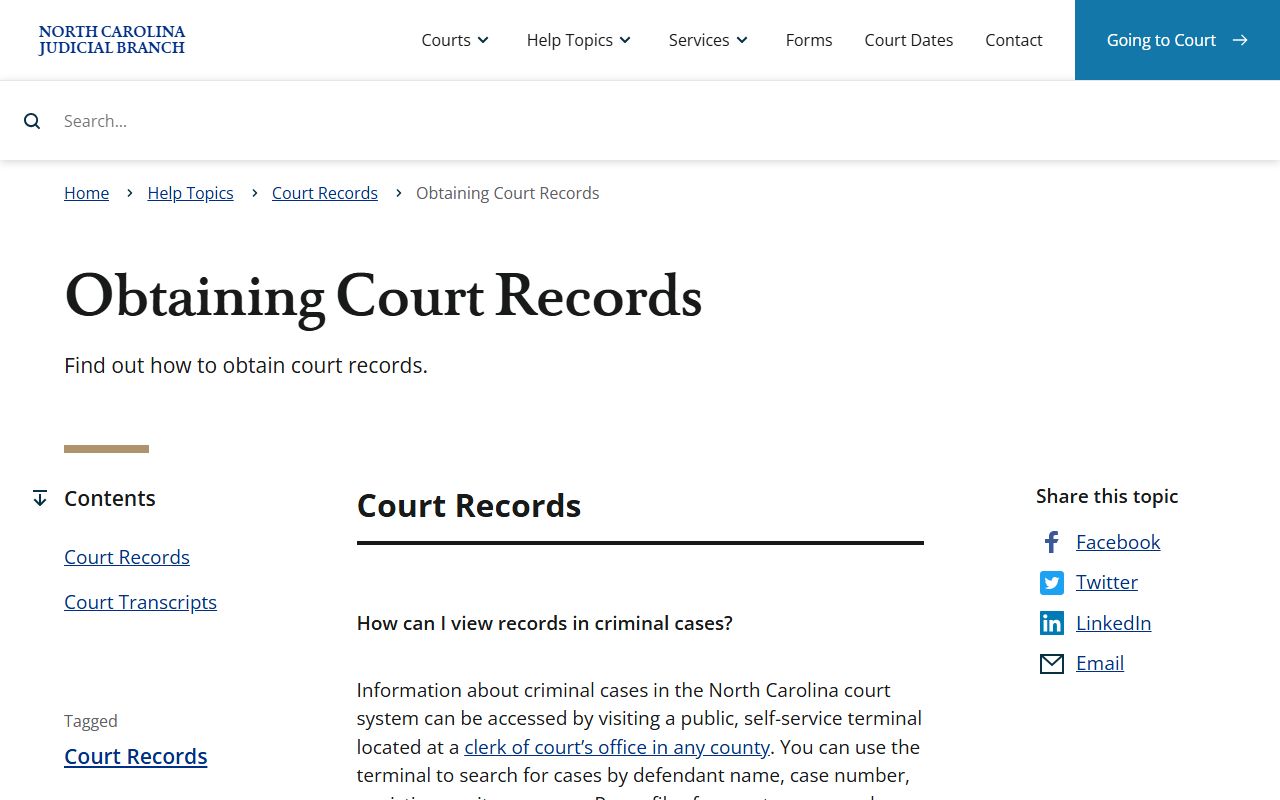
For Dare County, that statewide process is paired with the Clerk's local public terminals and the paper files held in Manteo.
What Dare County Court Records Show
A Dare County court record is more than a name search result. It is the court's file or index entry for a case, and the visible fields change by case type. Criminal matters use State versus defendant wording. Civil matters use plaintiff and defendant. Domestic and special proceedings often use petitioner and respondent. Estate records may identify a decedent, personal representative, heirs, filings, and accounting events.
| Field | What It Shows |
|---|---|
| Case number or citation number | The exact identifier for Portal searches, Clerk copy requests, calendar checks, and traffic payment. |
| Court division | Superior Court, District Court, Magistrate, Criminal/Traffic, Civil, Estates, or Special Proceedings. |
| Parties | Plaintiff, defendant, State, petitioner, respondent, decedent, personal representative, or other case participants. |
| Filing and hearing dates | When the matter opened, when hearings are set, and when deadlines or appeal windows may matter. |
| Docket entries | Events such as complaint filed, summons issued, service returned, motion filed, order entered, plea, disposition, or judgment. |
| Financial fields | Costs, fines, restitution, bond, filing fees, writ fees, sheriff service fees, and copy fees when public. |
| Public or restricted status | Whether the record is open, redacted, sealed, expunged, juvenile, adoption-related, or otherwise confidential. |
For criminal-only fields, use Dare County criminal court records when the question is about pleas, dispositions, sentence, or the difference between a filed charge and a conviction.
Public Access for Dare County Court Records
North Carolina law gives broad access to public records, but court files also follow court-specific rules. G.S. Chapter 132 defines public records broadly and says public records and public information compiled by North Carolina agencies are the property of the people. G.S. 7A-109 requires clerks to maintain records, files, dockets, and indexes, and makes them open for public inspection during regular office hours except where law says otherwise.
Fees depend on the channel. NCAOC policy cites inspection at no charge and ordinary public records copies at $0.25 per page under NCAOC public records policies and procedures. Court case copy fees and certified-copy rules may differ, so the Dare County Clerk of Superior Court should be contacted before assuming a fee for a case file. For non-court Dare County administrative records, Dare County routes requests to its county public records process, but the county states that divorce records, estates, wills, traffic violations, criminal and civil disputes, and other court-related records go to the Clerk.
The NCAOC records policy page is the source for statewide Judicial Branch copy policies and fee limits.
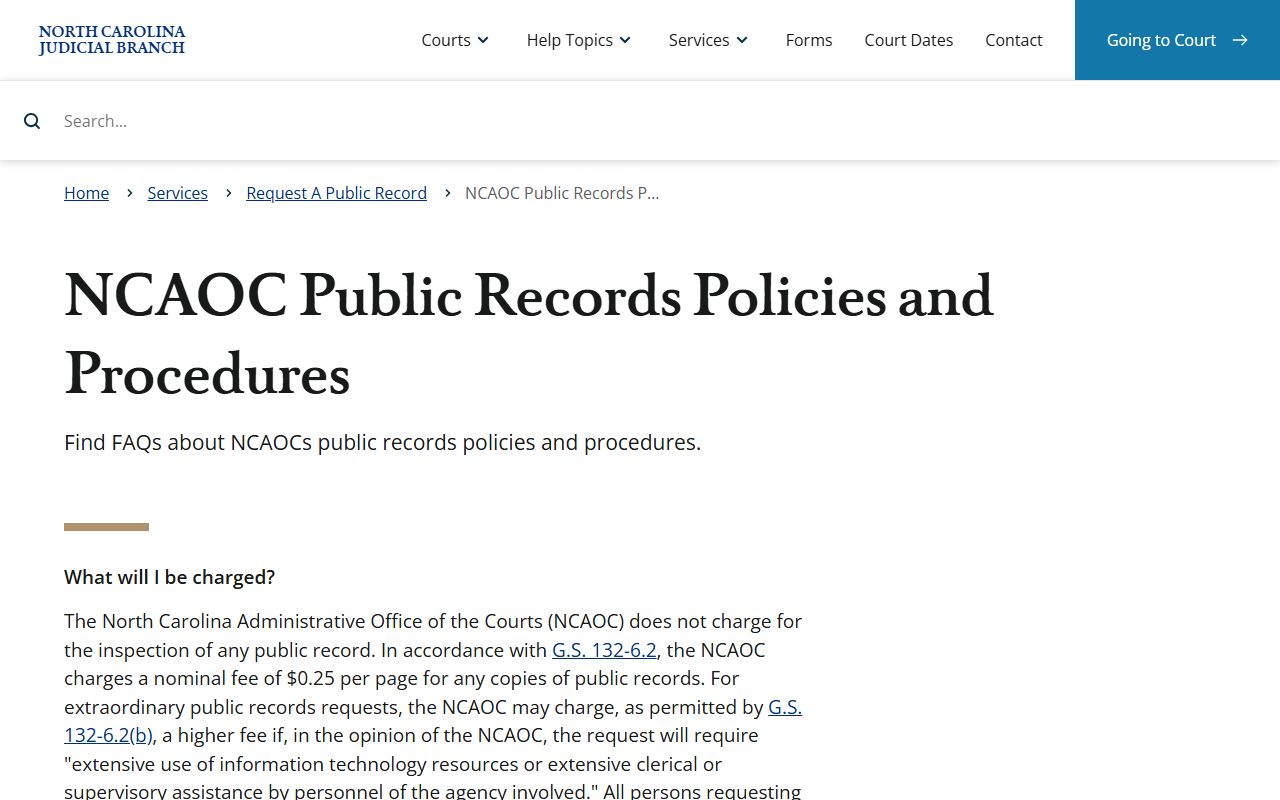
Use that fee policy for NCAOC public records requests, then confirm court file copies with the Dare County Clerk when the record is a local case file.
Note: Portal access is useful for lookup, but certified copies and older paper files still require Clerk contact.
Restricted Dare County Court Records
Some Dare County court records are not ordinary public records. The Clerk page excludes juvenile files, adoption records, and certain confidential records from routine inspection. State juvenile statutes keep juvenile court records separate from adult files. Sealed records require court authority or a statute for access. Expunged records are removed from public criminal history visibility under the court's expunction order. Personal identifiers are also limited by G.S. 132-1.10, which restricts display of Social Security numbers, financial account numbers, driver license and state identification numbers, passport numbers, PINs, passwords, and similar data.
A person seeking access to a sealed or restricted file should not assume the public terminal will show it. The practical route is to identify the case number, party names, and record type, then ask the Clerk what motion, court order, proof of identity, or statutory authority is required. Expunction petitions are filed in the Clerk's Office for the county where the charge was handled, and Dare County's Criminal/Traffic Division warns that eligibility depends on the charge, disposition, and defendant's age. Clerk staff cannot choose the correct form or give legal advice.
The N.C. eCourts Portal remains the first online lookup point for open Dare County court records.
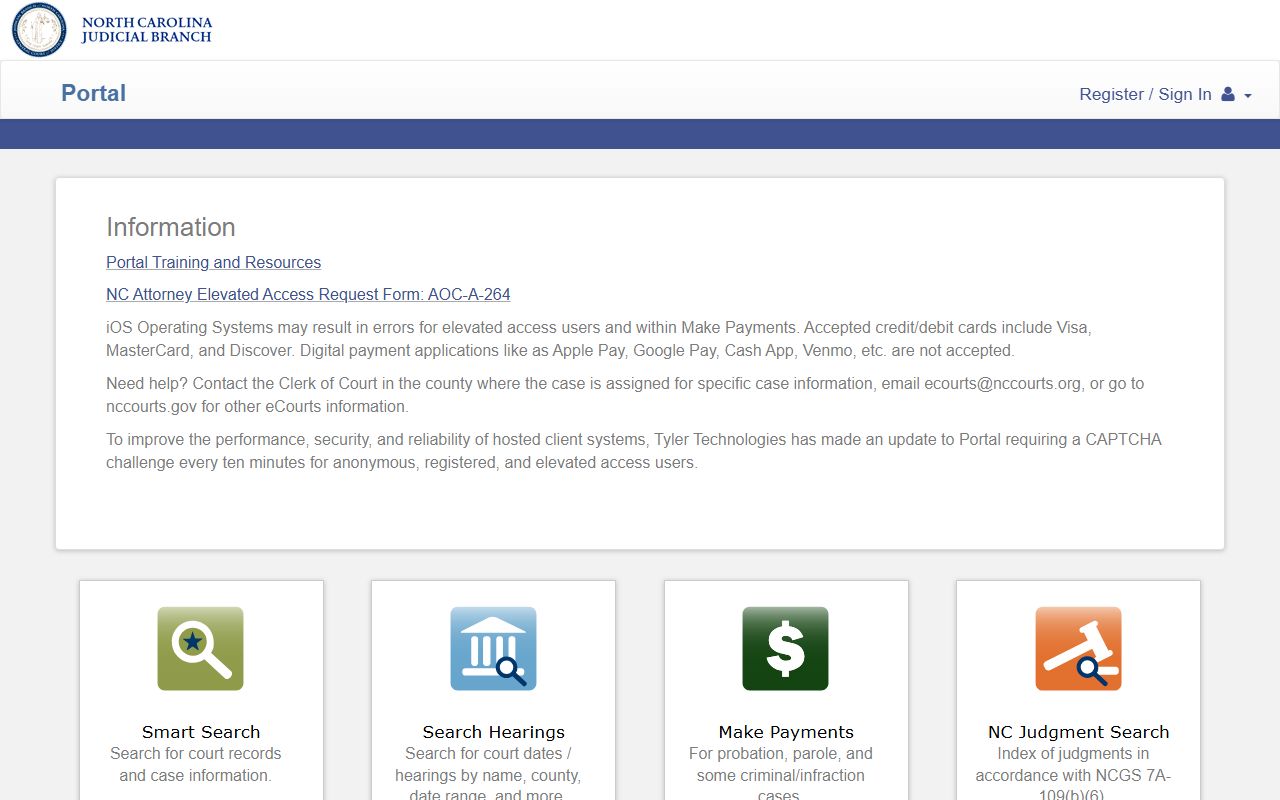
When the Portal does not show a record, the next step is not guesswork. Use the Clerk's public terminals, paper file access, or the proper request channel.
In-Person Dare County Court Record Requests
In-person access matters in Dare County because the Clerk's public computers and paper files can answer questions that a statewide online search may not. Bring the case number if available, or the full party name, record type, approximate filing date, and court division. For criminal background searches, the Judicial Branch specifically points users to the county clerk's office rather than Portal. For hearing questions, a calendar search may be faster than a file request, but the Clerk can help route civil, criminal, traffic, estate, and special proceeding records.
Clerk of Superior Court
Dare County Justice Center
962 Marshall C. Collins Drive
Manteo, NC 27954
252.475.5200
Monday-Friday, 8:30 a.m.-5:00 p.m.
The Clerk's mailing address is PO Box 1849, Manteo, NC 27954. Criminal/Traffic records, civil records, divorce judgments, estates, wills, traffic violations, and special proceedings all route through the Clerk rather than a county records warehouse. For court dates alone, the Dare County court dockets process is often the faster path.